Conclusion
- Press O or Escape for overview mode.
- Press the copy icon on the upper right of code blocks to copy the code
Class outline:
- Conclusion
What did we learn?
Programming paradigms
Imperative programming: using statements to change a program's state.
                    nums = [1, 2, 4]
                    for i in range(0, len(nums)):
                        nums[i] = nums[i] ** 2
Functional programming: expressions, not statements; no side-effects; use of higher-order functions.
list(map(lambda x: x ** 2, [1, 2, 4]))
(map (lambda (n) (expt n 2)) '(1 2 4))
Programming paradigms #2
Data-centric and object-oriented programming.
                    t = tree(3, [tree(1), tree(2, [tree(1), tree(1)])])
                    [b.label for b in branches(t)
                    innocent_bee = Bee(5)
                    horrible_ant = Ant(10)
                    innocent_bee.fend_off(horrible_ant)
Declarative programming: State goals or properties of the solution rather than procedures.
(.+)@(.+)\.(.{3})
calc_op: "(" OPERATOR calc_expr* ")"
                    SELECT parent FROM parents, dogs
                        WHERE child = name AND fur = "curly";
Programming concepts
- Data storage:
- Primitive/simple types: booleans, numbers, strings
- Compound types: lists, linked lists, trees
- Environments: rules for how programs access and modify named objects
- Higher-order functions: Functions as data values, functions on functions
- Recursion: approaching a problem recursively, general recursive patterns
- Mutability: mutable objects, mutation operations, dangers of mutation
- Exceptions: Dealing with errors
- Efficiency: Different programs have different time/space needs
Software engineering
- Abstractions, separation of concerns
- Specification of a program vs. its implementation
- Syntactic spec (header) vs. semantic spec (docstring).
- Example of multiple implementations for the same abstract behavior
- Testing: for every program, there is a test.
- Coding style (Composition)
What's next?
What's next?
After passing CS 111, you can now take the following CS courses:
- CS 235: Data Structures
- Next course needed for CS major or minor
- Language: C++
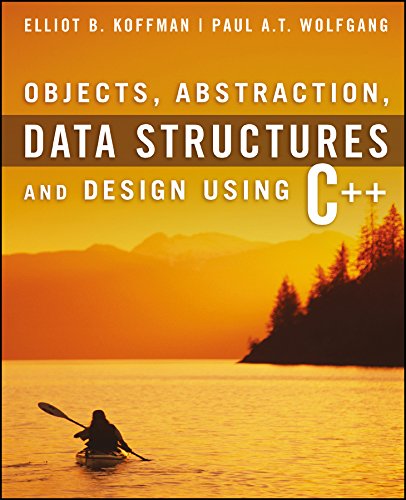
- Test Book: Objects, Abstraction, Data Structures and Design: Using C++
- Amazon.com: Can rent paperback ($15) or rent/buy e-Book ($20/$60)
- CS 260: Web Programming
- Required for CS major, elective for CS minor
- Language: JavaScript (similar to Python)
Specialized CS Courses
Here are some other CS courses you could take:
- CS 202: Software Engineering Lab 1
- 1 credit course for Software Engineering Emphasis
- Language: Java
- CS 180: Intro to Data Science
- Language: Python
CS Courses Prerequisites
CS 235
⬇
CS 224 or CS 236 or CS 240
(All these courses are required for the CS Major. CS Minor requires 236 and 240. See BYU catalog for more course details: https://catalog.byu.edu/physical-and-mathematical-sciences/computer-science/
Teaching Assistants
Opportunity to be a TA for CS 111
- Run a Section 💻
- Build your peer network 👥
- Share your knowledge and enthusiasm 🎉
- Help other students succeed and feel they belong ⚓
- Details 👇
- Work from 4-15 hours per week
- Flexible office hours
- Contact your TA Section leaders
Don't forget to thank this semester's TAs 👏